Published 8/14/2008 3:26:00 AM
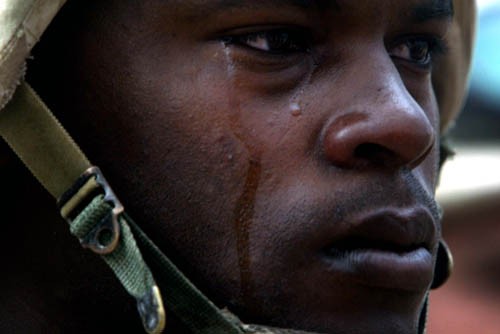
Nigerians should not cry over transfer – Gowon....
Jude Owuamanam, Jos
As Nigeria gets set to hand over the Bakassi peninsula to Cameroun on Thursday (today), a former Head of State, Gen Yakubu Gowon, has said that the ceded territory never belonged to Nigeria. He also denied accusations that he handed Bakassi over to Cameroun because of its support for Nigeria during the Biafran war.Gowon, who spoke in a telephone interview with our correspondent on Wednesday, said that the International Court of Justice at The Hague, which gave the ruling ceding the peninsula to Cameroun, was right. He added that Nigerians living in that part had the choice of living there under Camerounian laws or agreeing to be resettled in Nigeria.He said the misconception about the ownership of the peninsula arose when Nigeria was administering the western part of Cameroun as part of the United Nations mandate. Gowon explained that when a plebiscite was undertaken, the people of Western Cameroun decided to go to Cameroun whereas the northern part decided to be in Nigeria.He recalled that it took the ingenuity of the then Premier of Northern Nigeria, Alhaji Ahmadu Bello, to convince the northern part of Cameroun to be in Nigeria while the Nnamdi Azikiwe-led National Council of Nigeria and the Camerouns (as it then was) did little to convince the western part of Cameroun to to remain part of Nigeria.The former head of state said that the ICJ in its ruling, took into cognisance, the Anglo/German Treaties of 1885 and 1914, adding that at the dawn of independence, all African countries agreed to abide by the international boundaries agreed by the occupying powers.Meanwhile, a professor of History of International Relations, University of Lagos, Yomi Akinyeye, said, "The handover is in order. The place called Bakassi never belonged to Nigeria in the first place. The issues and the ownership are so clear."We were only misled by so-called experts who were misguided and who deceived us into going to the International Court of Justice. We never stood a chance."The documents with which the ICJ reached the inevitable decision are in the public archives, we in Nigeria have them, others have them in their own archives."They are based mainly on Anglo-German Treaty of 1913 and at Independence in 1960. It was obvious that other agreements would have to be made but based on the original legal documents signed between the two colonial powers of Germany and Britain."
Showing posts with label BAKASSI. Show all posts
Showing posts with label BAKASSI. Show all posts
16 August, 2008


Nigeria Cedes Bakassi To Cameroun
Nigeria Cedes Bakassi To Cameroun2008/08/14By Emma Una/ Calabar & Eromosele Ebhomele The controversial Bakassi Peninsula has been formally handed over to the Republic of Cameroun. The ceremony took place today, in Calabar, the Cross River State capital. Top government officials from Nigeria, Cameroun, representatives of the United Nations, the diplomatic community, etc. witnessed the ceremony. The Nigerian delegation was led by the Attorney-General and Minister of Justice, Michael Aondoakaa. In his speech at the historic occasion, Aondoakaa said the handing over was a painful exercise. "We are saddled with the painful task of completing the implementation of the ICJ judgement," he said. According to him, there are arrangements for the resettlement of those who have chosen to leave the peninsula, promising the Nigerian indigenes who would remain in the area that their fundamental human rights would be maintained. While the Acting-Governor of Cross River State, R. Hon. Francis Adah, tasked the international community to assist in resettling the displaced Nigerians, who, he said, were already traumatised, the Camerounian minister of State for Justice, Professor Maurice Kamto, confirmed that his country would honour the Green Tree Agreement between the two countries. The United Nations Secretary General, who was represented, promised that the world body will support the displaced people and the governments of the two countries. The hand over process started two years ago, at exactly noon on Monday, 14 August, 2006, when the Nigerian flag and that of the Nigerian Army were lowered at one of the islands, Archibong Town in Bakassi. They were handed over to the then Attorney-General of the Federation, Chief Bayo Ojo, and the former Chief of Defence Staff, General Martin Luther Agwai, while the Camerounian flag was hoisted. It was then the Bakassi people were first hit by the realisation of a possible hand over of their land to Caremoun. They had thought a miracle would happen to change the International Court of Justice's ruling in favour of Cameroun. This ceremony became the first phase of the final hand over of the Peninsula extension of the territory of Calabar into the Atlantic Ocean with a population of between 250,000 to 300,000 people. The Republic of Cameroun had continually emphasised that the land belongs to it, capitalising on two agreements reached between it and the Nigerian government in the 1970s. The Yaounde II Declaration of 4 April, 1971, and the Maroua Declaration of 1 June, 1975, were devised to outline maritime boundaries between the two countries following their independence. The line was reportedly drawn through the Cross River estuary to the West of the Peninsula, thereby implying Camerounian ownership over Bakassi which covers an area of 665sq kilometers. Nigeria never ratified the agreement and Cameroun regarded it as being in force and this prompted the ICJ ruling in the Hague on 10 October, 2002. Despite the Green Tree Agreement between former President Olusegun Obasanjo and the Camerounian President, Mr. Paul Biya and the subsequent handing over process, a Federal High court sitting in Abuja put a hold to today's ceremony. However, for the first time, citizens of the country think that President Musa Yar'Adua has gone against the rule of law. Even members of the House of Representatives think so. The Chairman of the House Committee on Media and Information, Eziuche Ubani, said the National Assembly should have held on to the alibi of the Federal High Court, Abuja and remind the President of his beleif in the rule of laws. "We didn't do our job at the National Assembly. There were things we could have done to stop the President from handing over our territory, at least for now," he said. For the Senator representing Bakassi, Senator Bassey Ewah Henshaw, crying would not be enough to show the grief of the people. "Government has scathered my people all over the place. My people are all refugees everywhere with nowhere to call home," he said. Noting that nothing has come out of the resettlement effort of the Federal government, the Senator said, "the people are very bitter against those people that have done them in. In time, the people will be able to identify the real people who have put them in this terrible condition." According to him, the National Assembly was yet to ratify the ICJ judgement and the various agreements by the two countries. Meanwhile, Dr. Ambrose Akpnika, a one time Commissioner for Health in Cross River State and the Mkpisong Ukara of Calabar, has described the proposed relocation of the Bakassi people to Ikang in Akpabuyo Local Government of Cross River State as a farce which is bound to fail. Dr. Akpanika, who is a prominent indigene of Bakassi, said the people of Bakassi have lived in their present place of abode for over 200 years and have taken the Bakassi Island as their ancestral home, so it would be difficult to go where they don't know. Akpanika, who is one of the Kingmakers in Efik Kingdom, said that for a people who have never known any other place as their home, they will resist any attempt made to move them in the name of relocation. Speaking to P. M. NEWS in Calabar, Dr. Akpaniko said: "my stand on the issue is that there are Bakassi natives and there are also Bakassi people. People from all parts of Nigeria and from other countries who have lived in Bakassi for over 200 years, are called Bakassi people, they have no other home. Now you cannot ask these people to re-locate. But you cannot relocate Bakassi natives who are like the Aborigines Christopher Columbus saw when he went to America . "But I think there is a contraption trying to remove the Bakassi people from Bakassi. Cameroon was given sovereignty over the land of the people of Bakassi. "The question of moving them does not arise and the United Nations Charter did not stipulate that," he declared. He said the people of Bakassi had made presentation to the Senate Committee earlier in the year asking for a stay in the handover but this has been overruled "and I think that they must have made up their minds already about the people of Bakassi and had given one thing that had never been mentioned by anybody." Dr. Akpanika said the plan of those who are bent on relocating the people want to exploit the resources of the area. "That Bakassi is full of manganese not just oil that they are fighting for. Those people might be looking at the Manganese and Manganese is a special metal some of which is used in making planes and space ships. "So Manganese is more expensive than oil, so the people who are now trying to move the natives of Bakassi from their ancestral home to somewhere else are suspect. "So what we say is that we trace the history of the people to know those who have linkage with Bakassi for some 200 years, those who have gone to Bakassi to do business and those who don't have homes. "Above all, please, Bakassi natives cannot be relocated from their home land. We have islands that could be filled up for these people who have always done business in the river to resettle." He asserted that the Calabar channel should therefore not be handed over just like that. "The Agreement that divides the channel into two for Nigeria to occupy one corner while Cameroon occupies the other corner and after five years Cameroon will take over completely, is wrong," he said. |
10 August, 2008
MORE STORIES....BAKASSI ETC
THE REPUBLIC OF AMBAZONIA
(British Southern Cameroons)
THE PROBLEM: ILLEGAL ANNEXATION BY LA REPUBLIQUE DU CAMEROUN
- The Facts: Ambazonia which was described as "The United Nations Trust Territory of the Southern Cameroons under the United Kingdom Administration" achieved the objective of Trusteeship Administration on 1st. October 1960 with the promulgation of the Southern Cameroon Constitution (Order-in-Council). This effectively terminated Ambazonia's trusteeship status. Ambazonia thus became technically an adult UN member and would have been formally so seated if administering authority had so requested the General Assembly.
- UN Plebiscite of February 1961 invalid: Once trusteeship was legally ended UN had no legal authority to conduct any plebiscite in Ambazonia. But UN still did.
- PURPOSE OF PLEBISCITE: To vest UN with a Mandate to do one of the following "Two Alternatives": either (a) merge Ambazonia into Nigeria or, or (b) united Ambazonia and Cameroon in a Confederation of Sovereign States (CSS). The terms of the proposed confederation appear on the UN plebiscite manifesto stipulating that each state has EXCLUSIVE COMPETENCE in all maters except that, in the Eight subjects specified therein, federal law would prevail over state law if there is a conflict.
- WHY AMBAZONIAS VOTED FOR CONFEDERATION: After stating that progress of the Cameroon towards independence had not fallen behind that of Nigeria, on the Southern Cameroons Britain stated that "the position of the Southern Cameroons is largely that of a Region within the Federation of Nigeria." UK memo to Trusteeship Council dated 06/18/1958. The memo went on to state that the Southern Cameroons would achieve Self Government in 1958. This being one of the objectives of Trusteeship Administration, its achievement legally terminated further trusteeship administration. From the legal standpoint the Southern Cameroons ceased to be a Trust Territory, but an independent country in 1958. Yet the original intention of annexing it to Nigeria motivated UK to suggest Two Plebiscites for the Southern Cameroons. One to find out if the country wanted to remain with Nigeria or secede from Nigeria. If they voted for secession then the second plebiscite would as if they wanted to join Nigeria or remain independent.
After the Chair lady of the African Block, Ambassador Angie Brooks of Liberia presented to the UN a declaration jointly signed by Prime Minister and Dr. EML Endeley Leader of opposition (who were then participating in the United Nations debates of the ordinary session starting September 1959) proclaiming the secession of Southern Cameroons from Nigeria, the UN cancelled the idea of plebiscite number One. The UN acknowledged the Southern Cameroons and recognized it as a self-governing and separate nation from Nigeria. Again that by itself legally ended Trusteeship and the Southern Cameroons became an independent nation. Accordingly, the UN caused an independent constitution to be worked out and was promulgated as THE SOUTHERN CAMEROONS C ONSTITUION ORDER-IN-COUNCIL. This came into effect on October 1, 1960. Yet the UK insisted in the Plebiscite number Two, but ensured that it was framed in such a way that the alternative to joining Nigeria was to join Cameroon Republic which was then been ravaged by the UPC guerrillas seeking to depose the French puppet President Ahidjo. The UK believes that the terrorism exuding from this war would make Southern Cameroons opt to get back Nigeria.
But for the following three reasons our people still voted against merging into Nigeria.
[a] FIRST, of all if the UN eventually succeeded in creating the proposed Confederation the terms of Union as spelt out in the plebiscite ensured that Ambazonia would continue to be a sovereign state and have 'exclusive competence' in all maters subject only to the fact that in the eight matters where the Federal government was allowed to legislate its legislation would prevail in the event of a conflict with State legislation. Thus even in those subjects the states had concurrent jurisdiction with the Union government. Ambazonia would thus retain her sovereignty and exclusive competence over all else including her currency, the issuing, valuation and revaluation of same; while Cameroon would continue to depend on France which to this day constitutes the central Bank for Cameroon and issues, values, devalues and revalues currency for Cameroon.
[b] SECONDLY, at the post-plebiscite United Nations Conference which would draw the draft union constitution, all that the Ambazonian delegation needed to ensure the continued independence of Ambazonia, would be to make sure that there is no agreement on the draft federal constitution, or just walk out, or boycott it.
[c] THIRDLY, the draft, if at all agreed upon, would (the ratification clause according to the Plebiscite Manifesto) be submitted to the people to express their opinion for or against it. Thus once the Ambazonian people voted against it, there would be no union with Cameroon.
5. WHY UNITED NATIONS DROPS THE PLEBISCITE
The United Nations, on April 18, 1961 passed Resolution 1608 [XV} GAOR which: (a) Appointed a Commission to implement the said Plebiscite mandate, (b) Fixed October 1, 1961 for formal end of the presence of the UN Administration in Ambazonia, and then (c)On realizing that the objectives of the Trusteeship having been achieved (accordingly; [i] self-government in 1958 and [ii] independence in 1960), realized that the only legal authority which the UN had over the territory had ended. It was then argued that the UN had no legal authority for ever organizing the said plebiscite in the British Southern Cameroons at all.
That for the following two reasons the idea of creating a Union between the territory and the Republic of Cameroon must be dropped.
- The creation of a union fell totally outside the objectives of trusteeship stated in United Nations Charter Article 76(b);
- There being no legal authority for the plebiscite the mandate thus obtained was invalid and could not be implemented. That, the Southern Cameroons, as every other independent nation, should be left to determine its relations with other nations by itself.
Accordingly, the United Nations Commission appointed for working out the draft constitution for the proposed Confederation was dropped, but the date line of October 1, 1961 for United Kingdom to leave Ambazonia remained unchanged.
- THE ILLEGAL ANNEXATION OF AMBAZONIA
- On September 1, 1961 (i.e., a month before UK ceased to be agent of the UN in Ambazonia), the President of the Republic of Cameroon promulgated a constitution which suppressed the Southern Cameroons Constitution and assumed the powers of the Queen of England as Head of State of British Southern Cameroons.
- Franco-Cameroon troops moved into British Southern Cameroons and took over positions held by the British troops.
(c ) Finally on October 1, 1961, when their role as the UN Administering agents formally ended, the Queen's representative as Head of State of Ambazonia was transformed into British Consul to The republic of Cameroon with residence in Buea (Capital of Ambazonia) All these happened while the British were still formally the United Nations Trusteeship Administering Authority.
- THE AMBAZONIAN CASE as presented BEFORE THE INTERNATIONAL COURT OF JUSTICE which was rejected, is still the same CASE BEFORE THE INTERNAIONAL COMMUNITY, that is, if the rule of the law is to prevail
In 1994 Nigeria and Cameroon troop clashed over the oil rich Bakassi peninsula which was part of, and still part the Southern Cameroon. Recall the Bakassi people participated in the UN organized Southern Cameroons plebiscite as a region of the Victoria Plebiscite District. Cameroon's reaction was to immediately sued Nigeria at the International Court of Justice [ICJ] asking for Nigeria to withdraw its troops and pay reparation for its 'armed aggression".
SOME BACKGROUND ABOUT THE AMBAZONIAN MOVEMENT:
About a decade earlier, an Ambazonian Restoration Council [ARC] lead by the first President of the Cameroon bar Association, and Traditional ruler, Fon Fongum Gorji-Dinka, lunched a pacific and legalistic struggle for the restoration of the independence of Ambazonia. As may be expected the Fon, Fongum Gorji-Dinka was imprisoned without charge nor trial, but in reaction to international protests, Biya set him before a military tribunal and demanded the sentence of death by firing squad. When the tribunal acquitted him, Biya rearrested him and placed him under house arrest from where after more than two years; he made his escape to neighboring Nigeria. There the UN and Nigeria government accorded him protection as a political exile.
Back at home, the struggle continued with one of ARC founding fathers, John Fru Ndi, veering off to seek a 'democratic-based' solution from inside Cameroon by forming the Social Democratic Party [SDF]. The early SDF was a nationalist movement who catered to the people's aspiration for independence by rationalizing the incremental "hidden agenda" strategy. Its simplistic assumptions, devoid of any legal anchor, assumed that Ambazonians {Southern Cameroonians} could still be able to gain their independence by encouraging Cameroonians to accept and practice democracy. While all these were gaining momentum inside Cameroon, the ARC on the advice of foreign diplomats, filed at the United Nations in 1990 the formal Independence Proclamation of Ambazonia, with Fon Gorji-Dinka as Head of State of Ambazonia. There Ambazonia applied for her seat as a UN member state and demanded for the UN to end Cameroon annexation of Ambazonia.
To further provide evidence of having exhausted domestic remedies, Ambazonia, in 1992, file a law suit before the Mezam Division of the High Court of the Republic of Cameroon against Cameroon illegal and forcible occupation of Ambazonia. The Court located in Bamenda passed a judgment in favor of Ambazonia. It declared that Ambazonia is now a sovereign state illegally and forcibly been occupied by the Republic of Cameroon. The estoppels judgment of the Court also made an order for Cameroon to withdraw from Ambazonian territory to which the Cameroon's President Biya has ignored to this day.
In May of 1995, taking advantage of Article 62 of the ICJ Charter, Ambazonia filed an intervention in the Cameroon-Nigerian litigation over the Bakassi Peninsula at the ICJ. In it, Ambazonia challenged the basis of Cameroon's claim of sovereignty over Ambazonia, which Cameroon acknowledged to be the real owner of Bakassi peninsula. In a word, Cameroon, now aware that the confederation no longer exist, which is the only way they can have any legal claims over Bakassi, in its ICJ application, made the false claim in having Ambazonia's mandate to sue Nigeria over Bakassi. Ambazonia's intervention not only deprives Cameroon of that false claim of Ambazonian's mandate, but has also totally deprived Cameroon of even the right to have commenced the litigation against Nigeria.
CAMEROON'S CASE
- That Bakassi belongs to Ambazonia.
- That Ambazonia opted in the UN Plebiscite of 1961 for ANNEXATION by Cameroon.
- That Cameroon now owns Bakassi
- That the previous Nigerian-Cameroon accords, estopp Nigeria from taking her present position on the Bakassi boundary dispute.
JURISPRUDENCE QUESTIONS
QUESTION 1: Was the United Nations sanctioned Plebiscite of 1961 for the annexation of the Southern Cameroons {Ambazonia}?
ANSWER: (a) NO!.... By just the terms of the UN Manifesto, the TWO ALTERNATIVES, it envisaged but for a CONFEDERATION of SOVEREIGN STATES (CSS) to be called 'Federal United Cameroon Republics' to take effect only after both States have ratified the new constitution. (b) Recall, the "plebiscite' all by itself was an illegal enterprise and therefore non-binding to Ambazonians. Reasons why the UN dropped out of the "implementation segment" of its mandate because the plebiscite which gave it authority was illegal and therefore non-binding to all parties.
QUESTION 2. Can Nigeria still be able to stand on the side of the law and bring peace and justice to bear in this Gulf of Guinea region?
ANSWER: YES! By taking a stand on the side of the law and recognizing the extinction of the Cameroon Federation and, Ambazonia as the successor state of the now defunct Southern Cameroons --the last legal entity owning Bakassi. Nigeria should be able to take this position now in the post ICJ judgment era, to recover from the mistake they made in 1995 when their arguments did not account that the Cameroon federation had long been extinct since 1984. This is all more important since right from the start of their case, Nigeria knew there was to be no way it could have easily nullified the several Cameroon-Nigeria boundary accords signed by previous Nigerian Heads of States according Bakassi to what it though was a "Federated" Cameroonian state!
Again, as it is with the Greentree Agreement [GTA] of 2006, an opportunity exist for Nigeria to stand on the side of the law when it should invoke Article 6(2) to prove that the "Republic of Cameroon" cited as the country to receive Bakassi is the wrong country. Indeed a country that has perpetuated a FRAUD for so long, must be exposed if Nigeria wants its standing as a progressive African super power to hold!
Nigeria will have to state the facts as-is, that as of the extinction of the Cameroon Federation in 1984, the Republic of Ambazonia is the country which has title to Bakassi and not the Republic of Cameroon. Unless Nigeria stands by the law which deprives Cameroon of its claim of sovereignty over Ambazonia, which gave it right to sue Nigeria, Nigeria will soon be handing Bakassi but to the wrong country and by that committed a double jeopardy injustice!
It is therefore the responsibility of ALL PEOPLES OF GOOD WILL to get this message of TRUTH and JUSTICE out to the open as your own 'little', but significant contribution to PEACE in this tri-state Gulf of Guinea region. The TRUTH is that Cameroon today is occupying AMBAZONIA, and that the bases of Cameroon claims of sovereignty over Ambazonia is palpably false and totally invalid, and so her very right to have even commenced any litigation against Nigeria on Bakassi is invalid and not recognized by law.
Post script
Those who advocate that Ambazonia must remain part of Cameroon regardless of the FACTS are simply talking because Cameroon has the "power" advantage as of now. They TRUTH is they will never be able to proof their case anywhere in any court and they know this, reason Cameroon will continue to play the political obfuscation card. The only thing going for them is the default power disequilibrium which as of today still favors Cameroons. But as in all system dynamics this "unstable" state property must seek equilibrium along its two logical options. Either:
http://www.unhchr.ch/tbs/doc.nsf/(Symbol)/CCPR.C.83.D.1134.2002.En?Opendocument (1) In the total assimilation {absorption/annihilation/annexation} of what used to be the Southern Cameroons (Ambazonia), or
(2) In the total independence of what use to the Southern Cameroons (Ambazonia).
(SENT BY.... Edwin N. Ngang)
HIDDEN STORIES...BAKASSI
BAKASSI $300 BILLION CAMEROON U.N. BRIBE SCANDAL
The United Nations has confirmed per the Human Rights Committee judgment in the case of the exiled Ambazonian Head of State 'Gorji-Dinka –v- Cameroon': (a) that the Cameroon Restoration Law 84/01 dissolved the French and English speaking Cameroon Union created in 1961; (b) that it restored the French nation back as the republic of Cameroon while English speaking Cameroon took its native name Ambazonia; (c) that thereafter, Cameroon presence in Ambazonia is indeed an act of continuing aggression which must be terminated. The Committee's judgment inter alia reads… "As a result of the subjugation of Ambazonians, whose human rights were allegedly severely violated by members of the Franco-Cameroon armed forces, as well as militia groups, riots broke out In 1993, prompting parliament to enact the Restoration law 84/01, which dissolved the Union of the two countries. The author then became head of the "Ambazonian Restoration Council" and published several articles, which called on President Paul Biya of the Republic of Cameroon to comply with the Restoration Law and to withdraw from Ambazonia."
[Excerpt from ICCPR Communication # 1134/2002]
http://www.unhchr.ch/tbs/doc.nsf/(Symbol)/CCPR.C.83.D.1134.2002.En?Opendocument
------------------------------------------------------------------------------------------------------------------------------------------
(Sketch Map # 1)

----------------------------------------------------------------------------------------------------------------------------------------------------------------
On the dispute over the Bakassi Peninsular, both Cameroon and Nigeria conceded at the International Court of Justice (ICJ) that the peninsular belongs to neither of them but to Ambazonia ex British Southern Cameroons). The ICJ judgment reads: …."Republic of Cameroon points out that the map attached to the report of the United Nations Plebiscite Commissioner shows that the Bakassi Peninsular formed part of the Victoria South West plebiscite district in the Southwest corner of Southern Cameroons (Ambazonia). This would show that the peninsular was recognized by the United Nations as being part of the Southern Cameroons (Ambazonia)" {excerpt 2002 ICJ judgment paragraph. 210.
"Nigeria on its part….claims to have acted in self-defense. It further contends that if the Court should find that Cameroon has sovereignty over these areas, the Nigeria presence there was a result of 'reasonable mistake." ICJ paragraph 311. The ICJ accordingly ruled:….. "Nigeria is under an obligation expeditiously and without condition to withdraw its administration and its military and its police forces from the areas of Lake Chad which fall within Cameroon's sovereignty and from the Bakassi Peninsular." ICJ paragraph 314
Nigeria withdrew from the Lake Chad area and 37 villages reverted to Cameroon administration without such thing as a Greentree Agreement! In like manner, Nigeria is to withdraw from the Bakassi peninsular and it would revert to Ambazonian administration; which would be set up by the exiled Ambazonian Head of State either with the help of the United Nations peace keeping force or with some alternative security arrangements, while waiting for the Cameroon President Biya to withdraw from the Ambazonian mainland in compliance with commitments which the United Nations Secretary General Koffi Annan flew to Cameroon in January 2005 and obtained from him which reads: " I President Paul Biya of the Republic of Cameroon do here by in a bid to provide lasting peace to the Bakassi conflict, commit myself and my government to respect the territorial boundaries of my country as obtained at independence."
This is a self incriminating admission that Ambazonia is not part of Cameroon, but a sovereign state; and that Cameroon's occupation of Ambazonia is a source of the Bakassi conflict. That for lasting peace in Bakassi, Cameroon must withdraw from Ambazonia. Yet by the June 12, 2006 Greentree Agreement, Nigeria offers to giver Cameroon the very Bakassi Peninsular which by their admission and the ICJ judgment belongs to Ambazonia. Now as reported in the Nigeria's authoritative news 'BusinessDay" of May 21, 2008, Nigeria former Attorney General and Ad hoc ICJ Judge, Honorable Ajiobola's testimony at Nigeria's Congressional hearing is that the agreement to alter the ICJ judgment was procured with a Cameroon bribe of $300 billion oil bloc. ://www.businessdayonline.com/analysis/comments/10089.html?print
Did the UN Secretary General, and the Ambassadors of the USA, UK, France and Germany, (all whom as witnesses became the "Follow-up Committee") endorse this illegal and fraudulent alteration of the ICJ judgment, as accomplices; or were they duped to believing (as stated in Article 7 of the Greentree Agreement) that it sets modalities for implementing the judgment? The use of the Office of the United Nations Secretary General to alter the judgment of the ICJ sets a very damaging precedence; and the United Nations Secretary General is under an obligation to urgently set the records right by initiating the process of correcting the agreement to conform to the judgment it sets out to implement.
The good news is that the wrongful insertion of Cameroon in place of Ambazonia in the agreement has raised a fundamental dispute as to whether the document sets out modalities for implementing the ICJ judgment or it sets out to alter the said judgment? But then an alteration of the Court judgment which is not done by the Court itself is of null and void effect. For, by operation of law, the terms of judgment apply to the total preclusion of the alteration intended; that is to say, the ICJ Judgment that Bakassi Peninsular belongs to Ambazonia makes the Greentree Agreement read 'Ambazonia' in the place of 'Cameroon' wherever mentioned.
The Follow-up Committee members would acquit themselves of active complicity in the fraudulent alteration of ICJ judgment if and only if they, even by a simple majority, adopt the correction which is deemed to have been made to the agreement by operation of law. And so the making of Republic of Cameroon party to the Greentree Agreement has created a dispute within the meaning of Article 6.2 of the said Agreement which read as follows… "The Follow-up Committee shall settle any dispute regarding the interpretation and implementation of this Agreement." http://www.un.org/unowa/cnmc/preleas/sgstmts.htm#greentreehttp://www.un.org/unowa/cnmc/preleas/sgstmts.htm#greentree
The true parties to the Greentree Agreement are Nigeria and Ambazonia as sketch map below shows (map# 2)
----------------------------------------------------------------------------------------------------------------------------------------------------------------
(Sketch Map# 2)

-------------------------------------------------------------------------------------------------------------------------------------------------------------
Edwin N. Ngang
Ambazonia Information Bureau ;
09 August, 2008
DEFENCE PACTS...BAKASSI
The handing over of the Bakassi peninsula to Cameroon that may take place on the 14th of this month is a sad story especially for the inhabitants who we all know dread the Cameroonian government; Resettling them in an already inhabited community is also a bad choice by the FGN.
Going over the whole story of the Bakassi people and mistakes made by all concerned is just as painful as the wound, however, .the most painful of all is the crying of Nigerians which is summarized by these words from The Chief of Defence Staff, General Owoye Azazi,"……..I want to believe that if anything happens between Nigeria and Cameroon, the defence treaty between France and Cameroon would be called to force. They have such treaty with their former colonies. We don't have defence treaty with any country; we only have training agreements……………………" http://allafrica.com/stories/200807170436.html
In another interview a Nigerian officer bemoaned our stars because our defence agreement with Britain is worthless according to him. Is it not shameful that at this 'age' Nigeria or any African country should cry because she has no OYIBO (Whitman) to rush to help her beat-up her neighbouring African sister? It is a shame.
In the '80s before the sell out of the peninsular by those we know, the Nigerian armed forces (Army, Navy and Air force) did a spectacular military manoeuvre in that area (operation Sea Dog) probably to send a massage to Cameroon or to show 'we can be pugnacious at times if you step on my toes'. I lived in Enugu then, and we were all proud of the military movements/shipments toward Calabar area , but also wished those 'idle soldiers' did some other important social work for the community instead of going to play war games, eating fish pepper-soup and beer in Calabar creeks.
France did not waste a day in sending a matching force to Cameroon. Mirage jets started flying over the air spaces of Cameroon and we learnt even provoking the Nigerian military manoeuvres inside Nigeria spaces. The planes were taking off from an Aircraft carrier because the never cared to build any airport fit for such crafts for their ex-colonies and friends.
Now Nigeria is mourning because France wont allow her beat up Cameron and Britain may not come to our side to assist us because we do not have an 'all inclusive' defence pact with the Queen.
On the other hand Cameroon is happy because 'now our master is at the corner waiting for those big fools from Nigeria to cough loud in our direction….. after all said and done through them and their (ELF) oil company , the petroleum in Bakassi will soon make us better than Nigeria- that prodigal son of Africa"
These deep-rooted colonial mentality at his century is the most worrying aspect of this Bakassi issue.
Why must we at this age allow the colonial wolves come back to show us our boundaries. Is it of whose interest that these boundaries are shifted right or left?
It is a shame ladies and gentlemen.
Africa must wake up! It is not yet late.
Chukwubike .O Charles
Chukwubike .O Charles
( Cultural Mediator)
Foundation for Peace culture & Social Development (fpsd)
07 August, 2008
Why Nigeria Lost Bakassi At The World Court -Wali
|
Posta, news, sport, oroscopo: tutto in una sola pagina
Crea l'home page che piace a te!.
02 August, 2008
SOUTHERN CAMEROONIANS
IT MIGHT BE INTERESTING TO KNOW WHAT THE SOUTHERN CAMEROONIANS THINK OF THE ISSUE
WHAT THE SOUTHERN CAMEROONIANS SAY.......
--
Chukwubike Okey C.
WHAT THE SOUTHERN CAMEROONIANS SAY.......
.....It also emerged on Friday that Southern Cameroonians expressed support for the 40,000 Nigerians in Bakassi to fight against their oppressors from France and to secure a future for themselves.
Stephen Joseph, Media Liaison Officer of the Orgainsation of people Southern Cameroon Government and People, said: "We the people of the Southern Cameroon have followed events in the Bakassi area with a lot of interest. It is unfortunate that we have followed them as bystanders instead of as the interest concern.
"The people of the Southern Cameroon had hoped that the ICJ would use the Bakassi case to address a larger injustice against all the peoples of the Southern Cameroon, but the court decided to narrow its focus and considered only the matter of Bakassi."
They lamented the harassment Nigerians have gone through at the hands of Cameroonians, saying "the brutal French foreign legion that makes up the armed forces of the occupier in Southern Cameroon have indiscriminately terrorised our citizens using torture, rape, extortion and murder.
"This treatment has been dished out to us as well as people of Nigerian descent. The Anglo Saxon heritage has been the driving factor as exorbitant extortions and indiscriminate deportations have been reserved for people of Nigerian descent.
"In this effort we are expecting Nigeria and Nigerians to join our struggle to de-colonise our country from colonial occupation. The words of Kwame Nkrumah remain as true today as they were in the 1950s and 60s: that the liberation of one of us (Nigeria)is meaningless unless it leads to the total liberation of the African continent (including a free Southern Cameroon).
"It is in this effort that the government of the Southern Cameroons stand in total support of the different groups in Bakassi that are putting up a courageous fight against the French colonial occupation of their land. It is a fight that the people of the Southern Cameroon should have put up in 1961 but did not, and allowed foreigners, speaking a foreign language, to invade the Southern Cameroon and today an enemy flag flies our skies.
"It is our determination that this must come to an end. We invite the fighting men and women of Bakassi to join our fight and become a part of the larger fight that did not take place in 1961 but which we must fight today."........
http://www.independentngonline.com/news/tfpg/article02--
Chukwubike Okey C.
No Going Back On Bakassi -FG
By Ofonime Umanah, (Port Harcourt), Bassey Inyang (Calabar) and Joe Nwanwko (Abuja)
Attorney General of the Federation and Minister of Justice, Michael Aondoakaa, reiterated on Friday that Nigeria will hand over Bakassi to Cameroon on August 14 despite the restraint imposed on Thursday by the Federal High Court in Abuja.
Aondoakaa explained that "I have been served with the court order, it is ambiguous and there are several decisions of the Supreme Court that court orders should be so explicit that the person who is directed to comply would be in position to comply, and I will the genesis of our dilemma here.
"I have a case where the same people from Bakassi instituted the same matter before the Federal High Court presided over by Justice Anuli Chikere, and we filed a notice of preliminary objection. The judgment they had sought Chikere to stop from being enforced, being the judgment of the ICJ, the same Federal High Court upheld our objection and held that the court had no jurisdiction and subsequently struck out the case.
"We have that judgment, which means that the Federal High Court has no jurisdiction to entertain any application on this matter, and nobody has appealed against that judgment. We have that as a final judgment. Today we are having another order that we should maintain the status quo, so the question is which status quo should we maintain?
"If I am to maintain any status quo, the status quo that is existing now is the judgment of the International Court of Justice, that is the truth. The status quo that is existing in law is the judgment of the International Court of Justice.
"If I have two judgments I will chose the one I like; like in this case I have two decisions from courts of coordinate jurisdiction, I will choose the one to obey, and for that matter, Chikere's judgment was a final judgment while this one was an interim order.
"I am not going to file anything to seek to set that ruling aside, what I am enforcing is the judgment of the ICJ, which is the handing over of Bakassi. The judge should have been more explicit and am not the Green Tree Agreement."
Justice Mohammed Umar of the Federal High Court had on Thursday granted the restraint order at the hearing of a suit filed by Bakassi indigenes.
He ruled that "the justice of this case is that parties to this suit should maintain the status quo, so that the res (substance)will not be destroyed. The res is southern Bakassi, which is to be ceded by the defendants on August 14th.
"It is hereby ordered that parties should maintain the status quo and should not take any step pending the hearing of all applications."
He adjourned the hearing to October 20 when the court would have resumed from vacation.
Cameroon was to assume full sovereignty over Bakassi on August 14 under the Green Tree Agreement signed in New York on June 12, 2006.
Cross River State Deputy Director of Civil Litigation, Bassey U. Bassey, reacted by saying that the order "is not capable of being obeyed because this court cannot sit as an appellate court on the judgment of the International Court of Justice at the Hague.
"All the issues in this case as well as the final ceding of Bakassi are fallouts from the judgment of the ICJ."
Counsel to the plaintiffs, Kayode Fasetire, countered that the suit is not to challenge the judgment of the ICJ but its implementation.
"We know that we are bound by the judgment of the ICJ. The Presidency did not submit the Green Tree Agreement to the National Assembly for ratification while the legislature also failed in its oversight functions to call the President to order," he explained.
"We are challenging the agreement and we are surprised that the President has said he would go ahead to hand over in the face of it. Nigeria has not done what it is supposed to do before implementing the Agreement."
The plaintiffs, led by two former Chairmen of Bakassi Council, Emmanuel Etene and Ani Esin, sought N456 billion as compensation before the cession, and an order that the Federal Government should resettle them in a place of their choosing.
They also requested an the amendment of the Constitution to reflect the cession as well as their relocation.
The plaintiffs rejected their resettlement in the "New Bakassi" already inhabited by other people "who are hostile to Bakassi refugees."
They argued that New Bakassi is a landlocked patch ideal for farmers, not fishermen like them.
They sought an order directing the Federal Government to resettle them in Nsutana Iyata in Cross River State or any other location in the state which they might choose by plebiscite or referendum.
The plaintiffs contended that the 206,000 indigenes of Bakassi are entitled to be protected and catered for by the Federal Government - and alleged that Cameroon has a history of imposing unfair taxes, molesting, as well as assaulting and killing Nigerian citizens in Bakassi.
Joined as respondents are President Umaru Yar'Adua, Aondoakaa, the National Assembly, former Cross River State Governor, Liyel Imoke, the state Assembly, National Boundary Commission (NBC), Federal Ministry of Finance, Central Bank of Nigeria (CBN), and the Revenue Mobilisation, Allocation and Fiscal Commission (RMAFC).
It also emerged on Friday that Southern Cameroonians expressed support for the 40,000 Nigerians in Bakassi to fight against their oppressors from France and to secure a future for themselves.
Stephen Joseph, Media Liaison Officer of the Orgainsation of people Southern Cameroon Government and People, said: "We the people of the Southern Cameroon have followed events in the Bakassi area with a lot of interest. It is unfortunate that we have followed them as bystanders instead of as the interest concern.
"The people of the Southern Cameroon had hoped that the ICJ would use the Bakassi case to address a larger injustice against all the peoples of the Southern Cameroon, but the court decided to narrow its focus and considered only the matter of Bakassi."
They lamented the harassment Nigerians have gone through at the hands of Cameroonians, saying "the brutal French foreign legion that makes up the armed forces of the occupier in Southern Cameroon have indiscriminately terrorised our citizens using torture, rape, extortion and murder.
"This treatment has been dished out to us as well as people of Nigerian descent. The Anglo Saxon heritage has been the driving factor as exorbitant extortions and indiscriminate deportations have been reserved for people of Nigerian descent.
"In this effort we are expecting Nigeria and Nigerians to join our struggle to de-colonise our country from colonial occupation. The words of Kwame Nkrumah remain as true today as they were in the 1950s and 60s: that the liberation of one of us (Nigeria)is meaningless unless it leads to the total liberation of the African continent (including a free Southern Cameroon).
"It is in this effort that the government of the Southern Cameroons stand in total support of the different groups in Bakassi that are putting up a courageous fight against the French colonial occupation of their land. It is a fight that the people of the Southern Cameroon should have put up in 1961 but did not, and allowed foreigners, speaking a foreign language, to invade the Southern Cameroon and today an enemy flag flies our skies.
"It is our determination that this must come to an end. We invite the fighting men and women of Bakassi to join our fight and become a part of the larger fight that did not take place in 1961 but which we must fight today."
18 July, 2008
THE BAKASSI ISSUE &OBASANJOS' GAME
Nigeria: Bakassi Green Tree Deal - Obasanjo Didn't Consult Military
17 July 2008
Abdul-Rahman AbubakarAbuja
The military brass was not consulted before President Olusegun Obasanjo signed the Green Tree Agreement which ceded the Bakassi Peninsula to Cameroon, Chief of Defence Staff General Andrew Owoye Azazi said in Abuja yesterday.
Speaking at the Senate Investigative Hearing on the Green Tree Pact signed by Obasanjo and Cameroonian President Paul Biya in 2006, General Azazi said, "I am not sure that the military made any contribution to the Green Tree Agreement, but I know that the then Chief of Defence Staff, General Martin Luther Agwai traveled with the former president to New York when the agreement was signed."
Azazi also told the Senate Committee that in the event of hostilities between Nigeria and Cameroon, France is likely to get involved in the conflict due to an existing defence pact between France and its former colonies.
The CDS said although no document shows the involvement of the military in the drafting and signing of the agreement, his office will continue to search and if anything turns up, he would send it to the Senate.
A senior Naval Officer on the CDS' team, Commodore Dele Ezeoba told the Senate panel that ceding Bakassi to Cameroon was not in the interest of Nigeria's security as the area will take away the adjoining deep marine routes, leaving Nigeria only with shallow waters which cannot be navigated. He said the area is more strategic to Nigeria than it is to Cameroon.
"I want to believe that if anything happens between Nigeria and Cameroon, the defence treaty between France and Cameroon will be called into force. They have such treaty with their former colonies. We don't have defence treaty with any country, we only have training agreements," General Azazi added.
Testifying before the Senate panel, Secretary General of the Bakassi Peoples General Assembly, Chief Ndabo Umo Nakanda said former President Olusegun Obasanjo intimidated the people of Bakassi, forcing them to dump their protest against the judgment of the International Court of Justice in the matter. He said, "We were invited by former President Obasanjo to the Aso Rock Villa. When we were seated the president said the press should excuse him and he warned us not to mention the case again. He said we should not make any further publications because according to him, we were provoking Paul Biya by our complaints. We were intimidated not to talk."
Asked why the Bakassi people failed to make their voices heard on the matter, former Cross River State House of Assembly member representing Bakassi, Mr. Joe Etame said the former president intimidated the people of the area not to contest the matter. "He told us that he was at the verge of having a meeting with Biya, but that because of our publications and he brought out some newspapers out that Biya was no longer ready to meet with him. He warned us to desist from further media campaign, that he was going to negotiate in our best interest and that not even an inch of our land will be ceded. After that we were scared."
Chief Nakanda also alleged that the former president threatened to leave the Bakassi people's fate in the hands of Biya, saying, "He told us not to make any pronouncements again on Bakassi. That was enough intimidation. He even said, if you ever make any publication again, I will leave you to Biya, can you fight Biya?
At yesterday's hearing, the Bakassi Peoples Assembly rejected the Green Tree Agreement and called on the Senate to device means which will enable Nigeria to appeal the ICJ ruling on Bakkasi. It said, "This Senate should put machinery in place to appeal the ICJ ruling to the United Nations Security Council. From the inception we have ten years option to appeal and three years is still left."
Chief Nakanda said the people of Bakassi have been hurt by both Nigeria and Cameroon saying, "We have seen that the overriding interest was solely economic rather than human interest. We appeal to Nigeria and Cameroon to sort their economic interests in the area and leave us alone."
He said the Bakassi people reject any plan to resettle them in an area already occupied by other ethnic groups, adding that such move will neutralize their culture and tradition and make them lose their identity. "We are saying the government of Cross River is trying to make a makeshift relocation camp. We reject it in its entirety. If we are forced to go there, there is going to be problem because we will lose our identity in three years. Where are we going to practice our traditions and religion? We have our shrines and deities; we cannot go and worship other people's deities. This cannot be overlooked because we still have our traditional religion," Chief Nakanda said.
He said the people are not happy that presently, their identity is already in jeopardy because they no longer have political presence either in Cross River State or at the National level. Chief Nakanda also said Bakassi Local Government formerly had ten wards but that has now been reduced to only five, while village names have been replaced with numerical figures. "Those names mean nothing to us," he said. According to him, the Green Tree Agreement is not in the interest of the Bakassi people as it infringes on their fundamental human rights.
Original articles:
17 July 2008
Abdul-Rahman AbubakarAbuja
The military brass was not consulted before President Olusegun Obasanjo signed the Green Tree Agreement which ceded the Bakassi Peninsula to Cameroon, Chief of Defence Staff General Andrew Owoye Azazi said in Abuja yesterday.
Speaking at the Senate Investigative Hearing on the Green Tree Pact signed by Obasanjo and Cameroonian President Paul Biya in 2006, General Azazi said, "I am not sure that the military made any contribution to the Green Tree Agreement, but I know that the then Chief of Defence Staff, General Martin Luther Agwai traveled with the former president to New York when the agreement was signed."
Azazi also told the Senate Committee that in the event of hostilities between Nigeria and Cameroon, France is likely to get involved in the conflict due to an existing defence pact between France and its former colonies.
The CDS said although no document shows the involvement of the military in the drafting and signing of the agreement, his office will continue to search and if anything turns up, he would send it to the Senate.
A senior Naval Officer on the CDS' team, Commodore Dele Ezeoba told the Senate panel that ceding Bakassi to Cameroon was not in the interest of Nigeria's security as the area will take away the adjoining deep marine routes, leaving Nigeria only with shallow waters which cannot be navigated. He said the area is more strategic to Nigeria than it is to Cameroon.
"I want to believe that if anything happens between Nigeria and Cameroon, the defence treaty between France and Cameroon will be called into force. They have such treaty with their former colonies. We don't have defence treaty with any country, we only have training agreements," General Azazi added.
Testifying before the Senate panel, Secretary General of the Bakassi Peoples General Assembly, Chief Ndabo Umo Nakanda said former President Olusegun Obasanjo intimidated the people of Bakassi, forcing them to dump their protest against the judgment of the International Court of Justice in the matter. He said, "We were invited by former President Obasanjo to the Aso Rock Villa. When we were seated the president said the press should excuse him and he warned us not to mention the case again. He said we should not make any further publications because according to him, we were provoking Paul Biya by our complaints. We were intimidated not to talk."
Asked why the Bakassi people failed to make their voices heard on the matter, former Cross River State House of Assembly member representing Bakassi, Mr. Joe Etame said the former president intimidated the people of the area not to contest the matter. "He told us that he was at the verge of having a meeting with Biya, but that because of our publications and he brought out some newspapers out that Biya was no longer ready to meet with him. He warned us to desist from further media campaign, that he was going to negotiate in our best interest and that not even an inch of our land will be ceded. After that we were scared."
Chief Nakanda also alleged that the former president threatened to leave the Bakassi people's fate in the hands of Biya, saying, "He told us not to make any pronouncements again on Bakassi. That was enough intimidation. He even said, if you ever make any publication again, I will leave you to Biya, can you fight Biya?
At yesterday's hearing, the Bakassi Peoples Assembly rejected the Green Tree Agreement and called on the Senate to device means which will enable Nigeria to appeal the ICJ ruling on Bakkasi. It said, "This Senate should put machinery in place to appeal the ICJ ruling to the United Nations Security Council. From the inception we have ten years option to appeal and three years is still left."
Chief Nakanda said the people of Bakassi have been hurt by both Nigeria and Cameroon saying, "We have seen that the overriding interest was solely economic rather than human interest. We appeal to Nigeria and Cameroon to sort their economic interests in the area and leave us alone."
He said the Bakassi people reject any plan to resettle them in an area already occupied by other ethnic groups, adding that such move will neutralize their culture and tradition and make them lose their identity. "We are saying the government of Cross River is trying to make a makeshift relocation camp. We reject it in its entirety. If we are forced to go there, there is going to be problem because we will lose our identity in three years. Where are we going to practice our traditions and religion? We have our shrines and deities; we cannot go and worship other people's deities. This cannot be overlooked because we still have our traditional religion," Chief Nakanda said.
He said the people are not happy that presently, their identity is already in jeopardy because they no longer have political presence either in Cross River State or at the National level. Chief Nakanda also said Bakassi Local Government formerly had ten wards but that has now been reduced to only five, while village names have been replaced with numerical figures. "Those names mean nothing to us," he said. According to him, the Green Tree Agreement is not in the interest of the Bakassi people as it infringes on their fundamental human rights.
Original articles:
Subscribe to:
Posts (Atom)


