20 April, 2015

Why Buhari Is Not The Type Of Person I Would Like To Call My President – Femi Aribisala
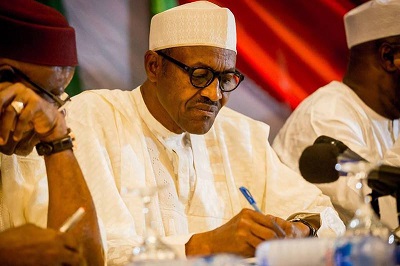
Why Buhari Is Not The Type Of Person I Would Like To Call My President – Femi Aribisala

Muhammadu Buhari
Buhari is not the type of person that I would like to call my president. I don’t even agree that he is a strong leader. He is not very intelligent, he is not very articulate and I don’t even agree that he is a strong leader.
Controversial Vanguard columnist and fellowship coordinator of Healing Wings, a pentecostal Christian fellowship in Lagos, Femi Aribisala says President-elect Muhammadu Buhari still needs to ask for forgiveness for killing people through extra-judicial means and for jailing people for telling the truth, among other things. Apart from the sins he says Buhari needs to seek forgiveness for, Aribisala also thinks he cannot move the economy of Nigeria forward.
“In my view, I am pessimistic. I don’t think Buhari can move the economy forward because he has no understanding of economics. I tell people that I am waiting for our currency to be equal to the dollar which is one of the things he promised,” Aribisala told Vanguard in an interview.
“One has to see who his advisers are. Again, one has to deal with his antecedents. If there was a change in Buhari, we should have known it in the last three months. It should have come out from his pronouncements during the campaign, but there was nothing there. He said he is going to give N5,000 to 20 million poor people in Nigeria and that is N120 billion which he is going to give away in a situation where the country is cash strapped. I am going to see how this is going to happen. Buhari does not understand how to tame corruption. He did not succeed the last time.
“There are certain tendencies in the man that tells me he does not understand how to tame corruption because we are talking of a change campaign. But who are the people around him? They are not changed people. It is paradoxical that now, the party chairman is saying they don’t want defectors anymore. But how did they come to where they are? I don’t see these changes coming with Buhari. This was a rhetoric that was convenient for the purpose of winning an election. It has succeeded, but don’t let us ascribe more to it. It is going to have some grand gestures but, in the final analysis, will be meaningless,” Aribisala said.
Speaking further, he maintained that Buhari is not the type of leader he could be proud of. “Buhari is not the type of person that I would like to call my president. I don’t even agree that he is a strong leader. He is not very intelligent, he is not very articulate and I don’t even agree that he is a strong leader. Most of the positions he held, his deputies were in charge. People run circles around him. Part of the problem with democracy is that we don’t necessarily have the best choices. You have to choose between bad choices or some bad choices. I don’t see anything that will, ordinarily, make me to want Buhari as my president. I don’t see how he is an improvement on Jonathan for whatever it is that you think of Jonathan,” he said.
 http://www.informationng.com/2015/04/why-buhari-is-not-the-type-of-person-i-would-like-to-call-my-president-femi-aribisala.html

14 April, 2015

Evil pastor arrested for impregnating 20 women in his church

Evil pastor arrested for impregnating 20 women in his church

A 53-year-old pastor who reportedly impregnated 20 members of congregation claims the Holy Spirit ordered him to have sex with them.
Nigerian police have now arrested Timothy Ngwu for abusing the young girls and women at Vineyard Ministry of the Holy Trinity.
Ngwu’s abusive behaviour was finally reported to the police by his estranged wife Veronica who grew tired of his adulterous behaviour – and reportedly impregnated her young neice.
A spokesperson for the Enugu State Police command his claims to be obeying the ‘spiritual’ urge to carry out the will of God, ‘irrespective of whether the woman is married or not.’
Ebere Amaraizu added: ‘When the woman is delivered of the baby, the child remains in the ministry with the mother for life.’
Ngwu told the same website he has 13 children with five different wives and the mistresses God’s ‘prophetic’ will told him to acquire.
He also claims he never had sex with any married woman unless their husbands consented to the Holy Spirit’s request.
Calista Omeje and Assumpta Odo both left their husbands to live with the pastor based on these holy commands.
Mother-of-eight Odo said Ngwu impregnated both her and her daughter, whose age is not known
And Calista – who has 10 children with her husband – said the pastor impregnated her but the baby died. She also revealed that she ‘gave’ her daughter to him.
The pastor’s brother – who did not want to be identified – said he had warned both Ngwu and his family about the self-proclaimed clergyman’s behaviour for a long time but they refused to listen.
He claims the arrest is ‘God’s wrath falling on his brother’, adding: ‘God’s anger has befallen my brother, we have severally appealed to him to stop what he was doing but he refused.
‘He has colonised our compound, bearing children with recklessness. He accused us of being jealous of him because he is doing the will of God.’
Pointing at the church’s compound, he continued: ‘Look at these buildings here… He has converted all of them to himself in the name of vineyard.
‘He sacked his betrothed wife who has three children for him and embarked on impregnating married women and young girls. Look at the whole compound littered with children of different sex and age.’
‘All members of the vineyard are fools, how can a woman abandon her husband for another man in the name of worshiping God and practice adultery? I cannot get myself invovled in this matter.
 http://www.freshnewsonline.com/2015/04/evil-pastor-arrested-for-impregnating.html
 

Tinubu demands oil wells from Buhari

Tinubu demands oil wells from Buhari


• Seeks to influence ministerial appointments
THERE are emerging indicators that the leadership of the All Progressives Congress (APC) is at a critical stage of bargaining and tradeoffs towards the post-election sharing of “political profits.” A reliable source from the top hierarchy of the opposition APC revealed to this Reporter that a National Leader of the party and former Governor of Lagos State, Asiwaju
Bola Ahmed Tinubu, is purportedly negotiating with the APC Presidential candidate, General Muhammadu Buhari, for allocation of oil wells in the Niger Delta as compensation for his support and huge financial commitment into the party from the stage of negotiations for merger and registration as a political party to the electioneering campaigns into the general elections. The party source, who sought anonymity but disclosed that he is a close political associate of the APC Presidential candidate, alleged that the two national leaders of the leading opposition party have been involved in secret meetings on the issues of allocation of oil wells and sharing of political offices, expressing optimism that the opposition party will win the February 14 Presidential election. 
The party source emphasised that the former Lagos State Governor may have been using the enormous wealth at his disposal, his political influence in the South West, to force the negotiation on Buhari and compel him to seal a deal as pre-condition for his total support for the former Head of State in the presidential election coming up in three weeks' time. The former governor was said to have allegedly demanded for about three oil wells license rights as compensation to him for the persistent support he has been giving to the party's presidential candidate and aiding him in scheming out other presidential contenders who were considered to be at advantage of having more funds and would have picked the APC ticket if he had not supported him at the National Convention and in mobilizing other party members for that cause.
The APC stalwart revealed that both national leaders of the party  have resolved that after winning the presidential election, immediately the APC assumes office in May, the APC-Federal Government will revoke all existing licenses of people allocated oil blocs in the Niger Delta, then, open bidding for new allocations. That is the process Tinubu was alleged to anticipate giving himself the advantage to acquire the license for oil wells allocation. 
The party source observed that the party's candidate, whom he often referred to as his principal, considered the negotiation on oil wells allocation a difficult bargaining to concede to Tinubu but that Buhari has been under pressure to succumb in order not to lose the South West votes which he overwhelmingly relies on Tinubu to mobilize. The APC presidential candidate was, however, said not to have given his word on the oil wells allocation demand but solicited for little time to make consultations before they would reach final conclusion, though, Tinubu was alleged to be opposed to such consultations, and had purportedly told the former head of state to “either concede to his demand or forget the votes of the South West.” It was alleged that the APC presidential candidate decision is expected to be made as soon as possible, before the February polls.   
There was an insinuation that Tinubu allegedly made similar request in 2011 when he was negotiating with President Goodluck Jonathan for the South West support in the presidential race. It was gathered that he was promised both money and oil wells but was first compensated with money and told to wait for the oil well allocation later. It was disclosed that he did not get the oil well allocation, thereafter, and has since then, not been happy with President Jonathan for that disappointment.
Other issues said to be placed on the table in the secret negotiations between the two APC leaders were indicated to include the sharing of political offices at the federal level. They were said to have both agreed on the Senate President being zoned to the North Central, reserving that position for Senator Bukola Saraki, former Governor of Kwara State. Tinubu was, however, alleged to have demanded that the Speaker of the House of Representatives be zoned to the South West, or in alternative the Secretary to the Government of the Federation, to augment the Vice President, who he considered does not have constitutional powers but may be playing nominal roles in government as may be delegated to him by the President. The former governor was further alleged to have also put on the negotiation table to be given the power to influence certain ministerial appointments. He was purported to have shown interests in influencing the appointment of the Minister of Finance, Minister of Petroleum, Attorney General of the Federation and Minister of Justice as well as Minister of Aviation, which he was alleged to be further requesting to be given to his political camp. The former Governor of Ekiti State, Dr. Kayode John Fayemi, was alleged to be considered for either the Finance or Aviation portfolio by the APC national leader in the South West. 
Tinubu, it was disclosed, assured Buhari that given these demands, he will do everything possible to ensure victory for him in the presidential election not only in the South West but also in several parts of the South-South and the South East.       
The demands made in the secret negotiation was further said to have placed Buhari in dilemma because he has at all-time vowed to stamp out corruption from the system and, therefore, found himself at a crossroad of bribing a party member for support to win election. “The issues of insecurity, unemployment, economic slide, corruption and others will be tackled with all sincerity…,” Buhari had repeatedly declared in his campaign.
Buhari, it was disclosed, had been reminiscing on what former President Olusegun Obasanjo told him at Ota, Ogun State that, “a political party is like a microcosm of a nation, which would consist of near saints, devils, rapists, and armed robbers;” and how Obasanjo admonished him that he may use rapists or robbers for the purpose of electioneering campaign but that when the party wants to go into government after the elections, it must look for men and women of integrity. The former President had further stated that people of integrity  make things better for a government, the country and the citizenry.
The APC presidential candidate's associate also told our Reporter that his principal, as he called Buhari repeatedly, is having the big problem of discussing such personal demands with the entire leadership of the party, particularly, the northern caucus of the APC, who he said are expected to play different roles in the nomination or appointment of party members into various political offices after the elections. He added that in all, Buhari acknowledges the immense contributions of Tinubu, in terms of funding, making himself available at all times, committing his political structures in the South West to the APC set goals, mobilizing other party members for common cause and personal interventions to minimize conflicts in the party.
http://www.nationaldailyng.com/news/latest-news/2269-tinubu-demands-oil-wells-from-buhari

11 April, 2015

Chimamanda Adichie: On The Oba Of Lagos

Chimamanda Adichie: On The Oba Of Lagos

Posted By: Olisa.Tv Staff
Posted on Friday, April 10th, 2015 at 7:22pm

By Chimamanda Adichie
A few days ago, the Oba of Lagos threatened Igbo leaders. If they did not vote for his governorship candidate in Lagos, he said, they would be thrown into the lagoon. His entire speech was a flagrant performance of disregard. His words said, in effect: I think so little of you that I don’t have to cajole you but will just threaten you and, by the way, your safety in Lagos is not assured, it is negotiable.

There have been condemnations of the Oba’s words. Sadly, many of the condemnations from non-Igbo people have come with the ugly impatience of expressions like ‘move on,’ and  ‘don’t be over-emotional’ and ‘calm down.’ These take away the power, even the sincerity, of the condemnations. It is highhanded and offensive to tell an aggrieved person how to feel, or how quickly to forgive, just as an apology becomes a non-apology when it comes with ‘now get over it.’

Other condemnations of the Oba’s words have been couched in dismissive or diminishing language such as ‘The Oba can’t really do anything, he isn’t actually going to kill anyone. He was joking. He was just being a loudmouth.’
Or – the basest yet – ‘we are all prejudiced.’ It is dishonest to respond to a specific act of prejudice by ignoring that act and instead stressing the generic and the general.  It is similar to responding to a specific crime by saying ‘we are all capable of crime.’ Indeed we are. But responses such as these are diversionary tactics. They dismiss the specific act, diminish its importance, and ultimately aim at silencing the legitimate fears of people.

We are indeed all prejudiced, but that is not an appropriate response to an issue this serious. The Oba is not an ordinary citizen. He is a traditional ruler in a part of a country where traditional rulers command considerable influence – the reluctance on the part of many to directly chastise the Oba speaks to his power. The Oba’s words matter. He is not a singular voice; he represents traditional authority. The Oba’s words matter because they are enough to incite violence in a political setting already fraught with uncertainty. The Oba’s words matter even more in the event that Ambode loses the governorship election, because it would then be easy to scapegoat Igbo people and hold them punishable.

Nigerians who consider themselves enlightened might dismiss the Oba’s words as illogical. But the scapegoating of groups – which has a long history all over the world – has never been about logic. The Oba’s words matter because they bring worrying echoes of the early 1960s in Nigeria, when Igbo people were scapegoated for political reasons. Chinua Achebe, when he finally accepted that Lagos, the city he called home, was unsafe for him because he was Igbo, saw crowds at the motor park taunting Igbo people as they boarded buses: ‘Go, Igbo, go so that garri will be cheaper in Lagos!’
Of course Igbo people were not responsible for the cost of garri. But they were perceived as people who were responsible for a coup and who were ‘taking over’ and who, consequently, could be held responsible for everything bad.
Any group of people would understandably be troubled by a threat such as the Oba’s, but the Igbo, because of their history in Nigeria, have been particularly troubled. And it is a recent history. There are people alive today who were publicly attacked in cosmopolitan Lagos in the 1960s because they were Igbo. Even people who were merely light-skinned were at risk of violence in Lagos markets, because to be light-skinned was to be mistaken for Igbo.
Almost every Nigerian ethnic group has a grouse of some sort with the Nigerian state. The Nigerian state has, by turns, been violent, unfair, neglectful, of different parts of the country. Almost every ethnic group has derogatory stereotypes attached to it by other ethnic groups.
But it is disingenuous to suggest that the experience of every ethnic group has been the same. Anti-Igbo violence began under the British colonial government, with complex roots and manifestations. But the end result is a certain psychic difference in the relationship of Igbo people to the Nigerian state. To be Igbo in Nigeria is constantly to be suspect; your national patriotism is never taken as the norm, you are continually expected to prove it.
All groups are conditioned by their specific histories. Perhaps another ethnic group would have reacted with less concern to the Oba’s threat, because that ethnic group would not be conditioned by a history of being targets of violence, as the Igbo have been.
Many responses to the Oba’s threat have mentioned the ‘welcoming’ nature of Lagos, and have made comparisons between Lagos and southeastern towns like Onitsha. It is valid to debate the ethnic diversity of different parts of Nigeria, to compare, for example, Ibadan and Enugu, Ado-Ekiti and Aba, and to debate who moves where, and who feels comfortable living where and why that is. But it is odd to pretend that Lagos is like any other city in Nigeria. It is not. The political history of Lagos and its development as the first national capital set it apart. Lagos is Nigeria’s metropolis. There are ethnic Igbo people whose entire lives have been spent in Lagos, who have little or no ties to the southeast, who speak Yoruba better than Igbo. Should they, too, be reminded to be ‘grateful’ each time an election draws near?
No law-abiding Nigerian should be expected to show gratitude for living peacefully in any part of Nigeria. Landlords in Lagos should not, as still happens too often, be able to refuse to rent their property to Igbo people.
The Oba’s words were disturbing, but its context is even more disturbing:
The anti-Igbo rhetoric that has been part of the political discourse since the presidential election results.  Accusatory and derogatory language – using words like ‘brainwashed,’ ‘tribalistic voting’ – has been used to describe President Jonathan’s overwhelming win in the southeast. All democracies have regions that vote in large numbers for one side, and even though parts of Northern Nigeria showed voting patterns similar to the Southeast, the opprobrium has been reserved for the Southeast.

But the rhetoric is about more than mere voting. It is really about citizenship. To be so entitled as to question the legitimacy of a people’s choice in a democratic election is not only a sign of disrespect but is also a questioning of the full citizenship of those people.
What does it mean to be a Nigerian citizen?
When Igbo people are urged to be ‘grateful’ for being in Lagos, do they somehow have less of a right as citizens to live where they live? Every Nigerian should be able to live in any part of Nigeria. The only expectation for a Nigerian citizen living in any part of Nigeria is to be law-abiding. Not to be ‘grateful.’ Not to be expected to pay back some sort of unspoken favour by toeing a particular political line. Nigerian citizens can vote for whomever they choose, and should never be expected to justify or apologize for their choice.
Only by feeling a collective sense of ownership of Nigeria can we start to forge a nation. A nation is an idea. Nigeria is still in progress. To make this a nation, we must collectively agree on what citizenship means: all Nigerians must matter equally.

 http://www.olisa.tv/2015/04/10/chimamanda-adichieoba-lagos/

06 April, 2015

Why Igbos don't need the Senate Presidency: Post election musings.

Why Igbos don't need the Senate Presidency: Post election musings.
The most retrogressive argument I have heard people make after the election is that the Igbos have committed a political suicide by voting overwhelmingly for the PDP. The fallacy of this assumption is that the proponents think Nigeria should suddenly become a one party state because somebody is shouting change. This definitely is not democracy. Someone even argued that they should have at least voted some people into the National Assembly to win the golden price of Presidency of the Senate or Speaker of House of Reps. Since when do ethnic groups meet to decide to give some votes to one party and some to others. Again I am baffled at our shortsightedness for the following reasons;
1. During the inglorious years of Obasanjo in power, the Igbos had the Senate Presidency for 8 years without any corresponding dividend to our people. Instead the most anti- democracy President we ever had ensured that touts kidnapped a seating Governor in the East. What will the senate Presidency change now?

2. The proponents are so parochial that they think that the more than 200 other minority ethnic groups in Nigeria are not good enough for these positions. Otherwise how will the famous advocates of change think that Nigeria is a kingdom divided among the three major ethnic groups-hence Hausa for President, Yoruba for Vice and oh Igbos just lost the opportunity to present a Senate President. I think we are not being fair to the minority from where Goodluck Jonathan comes from. Could that be the reason why he was promised no peace during his administration and so it came to be. 

3. If history should be our guide, take a ride back toI1998 when the PDP lost in South West (Yoruba) and the six states went to the opposition Alliance for Democracy. President Obasanjo actually lost in his ward. Nobody called it political naivety. In 2003, on ethnic consideration, the AD governors decided to vote Obasanjo of PDP for the presidency and to vote AD for governorship. Note that this was an election against the current face of change Gen. Buhari. The agreement went soar and Obasanjo rigged all gubernatorial elections in favour of PDP. Tinubu the then Governor of Lagos state was the only survivor. I think students of history will admit that what the Igbos did is neither a precedent nor strange in our land. 

4. In conclusion, the Igbos are comfortable in the opposition and vibrant opposition is one of the most important elements in a healthy democracy. Suffice it to say that we will be deepening the democratic process from our current position and we don't want any mourners crying for the Igbo people.
 by IKENNA UGWU

31 January, 2015

Chadian soldiers recapture Nigerian town from B'Haram

Chad Fights Boko Haram in Nigeria as Call Goes Out for Regional Force

Chadians Clear Islamist Insurgents from Nigerian Town of Mallam Fatori

Soldiers of the Chadian army at the border between Nigeria and Cameroon on Jan. 21. Chad sent a convoy of troops and 400 military vehicles into neighboring Cameroon to battle Boko Haram on Jan. 17-18. ENLARGE
Soldiers of the Chadian army at the border between Nigeria and Cameroon on Jan. 21. Chad sent a convoy of troops and 400 military vehicles into neighboring Cameroon to battle Boko Haram on Jan. 17-18. PHOTO: AGENCE FRANCE-PRESSE/GETTY IMAGES
Chadian military forces liberated a Nigerian town from Boko Haram militants on Friday, hours after the African Union’s top official called on Nigeria’s neighbors to contribute to a 7,500-strong multinational force to combat the Islamist insurgency escalating beyond the country’s borders and prevent the destabilization of the West African region.
Troops from Nigeria’s neighbor launched their attack on Wednesday, a local military official said. A spokesman for the Nigerian army confirmed the Chadians had cleared Boko Haram from the Nigerian town of Mallam Fatori, and said the operation had been coordinated with Nigeria’s military, also operating in the area.
Chad’s military presence in Nigeria and the African Union’s call for a multinational military operation to push back the militant group underscore both Boko Haram’s reach and the region’s frustration with Nigeria’s failure to contain it.
The call to arms for Nigeria’s neighbors comes at a politically sensitive time for Africa’s largest democracy and top economy.
President Goodluck Jonathan is in a tight contest for re-election, with security being among the main issues in the Feb. 14 vote. Despite having one of the continent’s largest armies, Nigeria’s military has failed to stop Boko Haram from slaughtering thousands of civilians and advancing toward major cities in the country’s northeast.
“The continued attacks in northeastern Nigeria, and the increasing attacks in the Lake Chad Basin, along the border with Chad and Cameroon…have ”far-reaching security and humanitarian consequences,“ Nkosazana Dlamini-Zuma, the chairwoman of the African Union, said in a statement released late Thursday. ”No efforts should be spared, as part of the AU counterterrorism agenda, to defeat this group.”

It is far from certain that Nigeria would welcome thousands of foreign troops on its soil for an extended period. President Jonathan’s government has largely opposed the idea, though in recent days the government has issued more conflicting opinions.
She asked AU heads of state to approve her proposal for a multinational military force in their meeting Friday afternoon and said the technical details for the mission would be set out Feb. 5-7 at a meeting in Yaoundé, Cameroon’s capital.
On Thursday, the president told a crowd in the northeastern city of Yola that Nigerian troops had liberated the town of Michika again. Warplanes screeched overhead as he spoke.
Nigerian troops have traded control over Michika for months, with Boko Haram slipping into the town, preaching to its residents, recruiting young men and boys, then slipping out as warplanes swoop in, residents said. The Islamic insurgency first overran the town in September: resident James Sunday remembers them going house to house, reassuring the townspeople that Boko Haram wouldn’t harm them, so long as they practiced Islam.
A month later, military jets bombed the area, followed by troops, the military said. Boko Haram left the town—but weeks later, returned, reasserting control. A presidential spokesman told the British Broadcasting Corp. on Friday that the government welcomed the AU’s move to deploy a multinational force to help fight Boko Haram, but days earlier the country’s national security adviser told a conference in London that the foreign force wouldn’t help and wasn’t necessary.
The army has said it is open to foreign military assistance, as long as the entire effort is subordinated into its own command and control structure, a stipulation Nigeria’s neighbors have found frustrating.
Nigeria’s opposition candidate—a retired general tied neck-and-neck with Mr. Jonathan—has made an issue of the incumbent’s reluctance to accept foreign help.
In a recent interview, Gen. Muhammadu Buhari said he would “certainly” welcome an AU force if elected. “If we are in trouble it is only right that we accept their help,” he said Wednesday.
The ramping up of military assistance—from its far poorer neighbors—could be seen as an admission of an inability to cope by the incumbent president. But African leaders appear to have lost patience with President Jonathan, and the Nigerian government to stop the wave of horrific attacks.
“Boko Haram’s horrendous abuses, unspeakable cruelty, total disregard for human lives, and wanton destruction of property are unmatched,” Ms. Dlamini-Zuma said in her statement.
The proposed military force would fight against the Islamist militants, help refugees fleeing their homes because of Boko Haram assaults, and search for the hundreds the group has abducted, including the more than 250 schoolgirls still missing since April last year, according to the statement issued by Ms. Dlamini-Zuma.
She said that the United Nations should finance this new force’s operations through a trust fund and that the setup of the force should follow the template of similar ones in Mali, the Central African Republic and Somalia—all countries that in recent years have teetered on the verge of collapse because of civil conflict.
Still, the force proposed to halt Boko Haram’s rapid emergence as a military threat in Nigeria will be a fraction of the one deployed in Somalia, staffed with more than 22,000 uniformed personnel. The AU’s forces in Mali and CAR are also larger, counting more than 10,000 soldiers each.
The regional army to combat Boko Haram would be staffed with soldiers from Chad, Niger, Nigeria, Cameroon and Benin and be given a year to deploy to begin with, Ms. Dlamini-Zuma said.
—Gbenga Akingbule in Abuja, Nigeria contributed to this article
Write to Drew Hinshaw at drew.hinshaw@wsj.com and Matina Stevis atmatina.stevis@wsj.com
http://www.wsj.com/articles/african-union-calls-for-regional-force-to-combat-boko-haram-1422611046

29 January, 2015

Why I won’t be celebrating Nigerian independence


Why I won’t be celebrating Nigerian independence

THIS YEAR I’ve made the decision that I will not be participating in any Nigerian Independence Day celebrations.
And before you raise your glasses and toast to 54 years since we shook off our colonial oppressors, you may want to ask yourself: ‘is there really much to celebrate?’
In April, approximately 276 girls were kidnapped from a boarding school in the area of Chibok, Nigeria – an event that without a grassroots movement would have been silenced and swept under a proverbial rug. Five months later, they are yet to be returned.
When you toast to independence, you are toasting ignorance and a culture of impunity. Your celebration inadvertently implies that you are applauding a nation where, more recently, the failings surpass its successes.
RESOURCES
The Nigeria population has been let down when resources as basic as consistent electricity current remain a rarity.
It is a nation sitting in the shadow cast by corrupt and self-serving political figures that pillage its resources like an all-you-can-eat buffet with a two-hour seating time.
The girls of Chibok were failed again when the hashtag #bringbackourgirls was hijacked and revamped as #BringBackJonathan2015 on posters hanging audaciously over the side of buildings to promote President Goodluck Jonathan’s presidential campaign. They were only removed once international criticism began to mount; prompting Jonathan to make a statement that he had never endorsed them in the first place.
Rather than making toasts, throwing parties and tying gaudy geles, what this Independence Day should do is prompt critical thought about what 54 years of self-determination has produced.
In an article on the subject by acclaimed Nigerian playwright Wole Soyinka, he wrote: “If a people must survive, the reign of impunity must end.” This isn’t a critique on terrorism or on corruption; but a critique on ignorance.
Political figures control public resources and are in no genuine manner accountable. Under the fallacy of democracy, continued cultural conflicts have been allowed to divide a nation already historically fragile.
Nigeria is riddled with many inconvenient truths often blanketed by the cloak of patriotism.
The inconvenient truths would identify the number of public figures who manoeuvre and manipulate political circles for personal gain, including an investigation that unearthed and confirmed suspicions of Boko Haram financiers.
Among them, allegedly, is an individual working at the Nigerian Central Bank and another former governor and recent presidential travel companion.
I wonder how the girls of Chibok would have typically celebrated Independence Day; certainly this year would be starkly different to what they’re accustomed to.
If we are toast to anything this year, then let’s celebrate ourselves. Let’s celebrate the enduring nature of the Nigerian people but let’s stop enabling those who are failing the nation with complicit behaviour and premature celebrations.
The next time I celebrate Nigerian independence it will be when the girls of Chibok can celebrate alongside the rest of us and no longer facing a life in captivity, slavery or worse.
Ade Onibada is a freelance journalist, feminist and politics graduate. She is also a proud British Nigerian.


http://www.voice-online.co.uk/article/why-i-won%E2%80%99t-be-celebrating-nigerian-independence


How does the election in Nigeria affect us in the Diaspora?

How does the election in Nigeria affect us in the Diaspora?

IN THE RUNNING: Goodluck Jonathan is expecting another victory in this tight Presidential race
LIKE MANY Nigerian families living abroad, I send money back home at least once every month.
Why? Because, unfortunately, many of these relatives – even those who are graduates and can decorate entire walls with their qualifications – are out of work.
They are unable to work because they cannot find a job.
Who else can we blame but the political party that has ruled Nigeria for 16 years: the People’s Democratic Party (PDP), otherwise known as the ‘People’s Destroying Party’ by many of the country’s citizens.
The World Bank put the unemployment rate in Nigeria at 22 per cent in 2013, while the National Bureau of Statistics (NBS) has youth unemployment at an unacceptable 54 per cent in 2014.
When translated to an actual human figure, the latter statistic means that at least 64 million out of 170 million Nigerians are unemployed. It’s ridiculous!
ISSUE
Believe me, unemployment has always been an issue in Africa’s most populous country, but it is now at a record high.
Take a moment to think about the sheer amount of people who are unable to sustain themselves. It is no wonder that they depend so much on their relatives living abroad.
As many of us know, Nigeria is a resource-rich country. Why then, can’t its people find jobs? The answer is down to corruption.
Remember Governor James Ibori of the country’s oil-rich Delta state who in 2012 was sentenced by a London court after pleading guilty to fraud and money laundering?
His daughter Erhiatake Ibori will be running as a PDP candidate in the same state as her disgraced father who, according to a judge, acquired his riches “at the expense of some of the poorest people in the world”.
Ibori is one of those people who have participated in the decimation of Nigeria’s economy.
Yet he is currently being considered for extradition under the prisoners transfer programme which the UK government signed with Nigeria.
If this goes ahead, Ibori – perhaps like Diepreye Alamieyeseigha in 2013 (you know, the governor who jumped bail in the UK by allegedly dressing as a woman) – will get to Nigeria and be pardoned by the president.
It leaves many ordinary Nigerians wondering when favours for those with powerful friends will end and a pathway to prosperity for all citizens will begin.

ANTI-CORRUPTION: General Muhammadu Buhari with Professor Yemi Osinbanjo
President Goodluck Jonathan has promised to create two million jobs each year – a pledge I think is unachievable considering his record.
Figures released by the at National Bureau of Statistics (NBS) showed that 500,224 jobs were created across the country in the first six months of 2014.
TARGET
President Jonathan will fall very short of his target if things follow the same path this year.
For his critics, it is too late.
Two million jobs a year do not solve the backlog of 64 million jobless youth at present and the additional 1.8 million graduates who join them every year.
I’ve done the maths and the numbers don’t add up.
The image of our beloved country is in tatters abroad.
We, who proudly claim to be the giant of Africa, have become the laughing stock of our continent.
The presidential candidate for the opposition party, Muhammadu Buhari, has promised to fix the many problems Nigerians face both at home and abroad.
As an ex-military man who has dealt with insurgents in the past, he and his vice-president, a professor of the law and a former Attorney General of Lagos state, Yemi Osinbajo, pledge to deal with Boko Haram.
They have pledged to eliminate corruption and will also do the same with unemployment by making us less dependent on oil as an income. Oil prices, as the financial markets show, are tumbling.
All things considered, better governance, more transparent and with greater accountability in Nigeria, is beneficial to us in the diaspora.
A safe Nigeria might mean some of us might want to invest in Nigeria. We might want to return back home.
Where there is labour, there will be need for manpower and that means jobs.
If Nigerians want things to change, we cannot do what we have always done. We cannot stay loyal to a political party that since 1999 has held on with little progress to show for it.
Perhaps a change of government is the change Nigeria needs. Maybe, we will see a reverse in fortunes. Instead of us sending remittances back home, our relatives can be in a position to help us here in the UK.