UK envoy lambasts TB Joshua over AirAsia crash prophesy by Temitayo Famutimi
 advertisement advertisement | |
|
| |
|
|

http://odili.net/news/source/2014/dec/30/821.html
advertisement | |
|
| |
|
|
advertisement | |


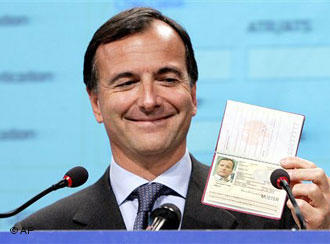
[africanews.com] Briefing the media after the meeting, Chief Ojo Maduekwe said the Nigerian government will do everything necessary to have the illegal aliens return home even as he told his guest to always accord the concerned Nigerians their human rights.
"As part of the Citizen Diplomacy of this government, we still want our people to be respected wherever they may be even as we do not encourage any Nigerian to travel to any country illegally, but in the case of Italy, we are also proud to reveal that more than 40,000 Nigerians are living there legitimately", Chief Maduekwe said.
The meeting which was a follow up to an earlier one by Chief Maduekwe and a delegation from Italy in New York at the 63rd Session of the United Nations General Assembly in 2008 also looked into economic and trade relations between the two countries.
The Italian envoy said that his country is ready to maintain the trade relationship with Nigeria especially in the areas of leather and leather works, timber, rubber and cocoa.
"I'm optimistic that Nigeria will continue to patronize us in the purchase of motor vehicles, agricultural equipment, electrical parts, aircraft spare parts, telecommunication equipments as well as chemical and pharmaceutical products", Dr. Frattini said.
Nigeria is Italy's second largest trade partner in Africa, in 2003, the volume of trade between the two countries was put at about 1.115 billion Euros. In 2004, Italy exported goods worth 486.3 million Euros to Nigeria while she imported goods worth 337.8million Euros from Nigeria.
Other areas of discussion included the Investment Promotion and Protection Agreement (IPPA) which is designed to encourage and attract Italian foreign investors to Nigeria; the Bilateral Air Services Agreement (BASA) and the Avoidance of Double Taxation Agreement.
Finally, the two diplomats deliberated on the 2004 Memorandum of Understanding (MOU) signed to combat the illicit act of women trafficking and they both admitted that a major improvement has been recorded as they keep their pledged to maintain the tempo until the act was abandoned by the perpetrators.
Kinsley Kobo, AfricaNews reporter in Abidjan, Ivory Coast
The Federal Government has reacted to the recent killing of a Nigerian in Ukraine, saying that the country will no longer condone such attacks on its citizens abroad.
As a result, the Ukrainian Ambassador to Nigeria, Mr. Oleg Skoropad, was summoned by the Ministry of Foreign Affairs on Tuesday to answer questions on the matter.
Minister of State for Foreign Affairs, Alhaji Jubril Maigari, who made the government's position known, expressed his sadness over the death of a Nigerian identified simply as Saludeen, killed in Ukraine, even though he had been residing in the country since 2001 and married to a Ukrainian woman.
In a statement made available to our correspondent on Tuesday, Maigari noted that in spite of the summons which was officially made since January 18, the Ukrainian authorities were yet to give satisfactory explanations for the death of the Nigerian.
The minister expressed the hope that Ukraine would put urgent measures to protect the lives and properties of Nigerians in that country.
The minister urged the Ambassador to convey his message to the home government, expecting that the culprits would be brought to book.
In his reaction, Skoropad lamented the incident and said his home government would fish out the culprits and punish them appropriately.
Skoropad suggested to the minister that both countries should have a Consular Framework, to help Nigeria and Ukraine strengthen their bilateral relations.
He reassured the minister that the unfortunate incident would not mar both countries' relations, pointing out that he was planning to send 1,000 student-visa to Nigerians this year.
The primary six pupil is disturbed that the strike might cause a postponement of her school leaving certificate examination and keep her longer in school. "My prayer is that the government will attend to the demands of our teachers and avert the strike. I am tired of being in primary school and will not like a strike to prolong my stay there," she said fearfully.
Nwadinma's agitation was understandable. She is 15 and most children her age were through with or on the verge of completing senior secondary education. But delayed education is one of the setbacks that Nwadinma had to suffer for being a victim of human trafficking.
At age five, she was taken off her parents in Abia State, South-East Nigeria, by a man she called 'Uncle' and whisked off to Gabon where, as a domestic servant, she was abused and dehumanised until she was rescued by the Nigerian Embassy in Gabon and brought home six years ago. "The years I spent in Gabon were a total waste. I was made to hawk all manners of commodities on the streets of Libreville. I was maltreated, starved and tossed around like a football," she recalled.
On her return to Nigeria, she was handed over to Nigeria's anti-trafficking body, the National Agency for the Prohibition of Traffic in Persons and other Related Matters which in turn, passed her to the Women Trafficking and Child Labour Eradication Foundation, a non-governmental organisation established by Titi, wife of former Vice-President, Atiku Abubakar, for rehabilitation.
Initially, WOTCLEF reunited Nwadinma with her parents but later took her off them for fear that they might allow her to be trafficked abroad again. The young girl is now one of the 900 victims of human trafficking that have so far been rescued from traffickers and rehabilitated by WOTCLEF at its rehab centre located in the Gwarimpa District of Abuja.
She is also one of the 19 that are currently been catered for by the humanitarian group. The others include victims that were repatriated from Gabon, Cameroun, Italy, Sudan and Saudi Arabia, where some of them worked as prostitutes and others as domestic servants. Two of the girls, according to WOTCLEF's Executive Secretary, Vero Umaru, are on the verge of completing university education while others are being trained in catering, hairdressing and tailoring.
Trafficking has defied solution in Nigeria
Nwadinma, her colleagues and others in NAPTIP's six rehabilitation centres across the country are however lucky to be back home to chart a fresh course for their lives. "Thousands of others like them, especially girls, who were smuggled across the borders never make it back to live a normal life.
Many of them are still trapped in major European, Asian and American cities, being sexually exploited," Umaru said. Between 2002 and June 2007, the Nigeria Immigration Service said it had rescued 1,366 victims and arrested 16 traffickers.
UNICEF Protection Programme chief, Robert Limlim, believes the problem of trafficking is particularly acute in Nigeria, because the country is also a strategic transit point for traffickers. "There is high demand for cheap, commercial African labour in other countries. Nigeria is the transit centre for this racket. There's a lot of money flowing through here," he said.
A 2003 FOS/ILO National Child Labour Survey estimates that there are 15million children engaged in child labour in Nigeria. These children are also vulnerable to being forced into prostitution, or, in many instances, are trafficked internationally.
To fight trafficking headlong, the Nigerian government established NAPTIP in 2003, after the National Assembly passed the Trafficking in Persons (Prohibition) Law Enforcement and Administration Act, in line with the 2000 United Nations Protocol to Prevent, Suppress and Punish Trafficking in Persons, Especially Women and Children, supplementing the United Nations Convention against Transnational Crime.
Since its establishment, NAPTIP has, as at May 26, 2008, in 87 court cases, prosecuted 128 persons believed to be engaged in the business of human trafficking in Nigeria. 29 of the cases have been concluded with 27 of the accused persons bagging between six-month and 20-year jail terms.
Those convicted include one Sarah Okoya who was arrested in Benin Republic while trafficking six Nigerian girls to Spain for prostitution; Jean Adjayi and two others who procured some girls from Cotonou in Benin Republic and subjected them to various forms of sexual exploitation; Hussaina Ibrahim who was nabbed after trafficking a girl to Saudi Arabia for prostitution; Franca Asiboja, an ex-victim, who recruited some girls with the help of an agent in Nigeria and trafficked them to Burkina Faso for prostitution.
Maris Akhabue was prosecuted for inducing her niece to travel to Italy for prostitution on the pretext that the victim would work as a baby sitter for one Rosemary Oshodin in Italy; Samson Ovenseri and Samuel Emwirovhanhkoe bagged one and five-year jail terms respectively for trafficking girls to Spain for prostitution through Benin Republic and Libya.
Glory Kehinde and Kate Ehiokpamwan were sentenced to one year imprisonment for trafficking girls to Libya for prostitution, while Monday Arioba and Martins Nwobu were also sent to jail for organising foreign travels for girls to travel abroad for prostitution.
But the convictions appear to have failed to deter the human merchants as the trafficking trade, according to Mohammed Babandede, NAPTIP's director of investigation and monitoring, has only assumed a more sophisticated dimension.
Babandede said investigations by his agency had shown that human trafficking in Nigeria had become a multi-million naira business with transnational traffickers having developed into a sophisticated mafia group.
"It is a big business and the traffickers are very organised. The merchants have recruiters and patrons. They have collaborators among embassy, immigration, border and security officials," he explained.
Umaru expressed a similar sentiment. "The human trafficking business is a syndicate. You have those who specialise in procuring fake passports and visas while there are those whose speciality is in bribing security and immigration officials at the border posts. It is a whole complicated chain," she said.
An official of NAPTIP, who pleaded not to be named said when his agency raided a trafficker's haven in Lagos in 2005, it found to its dismay that traffickers had developed manuals which they give to their victims to study. The manuals, he said, contained step-by-step precautions that the girls that were being trafficked abroad had to take to avoid being detected or arrested in transit and in their destinations. As part of their orientation programmes, the girls are reportedly given the manuals to study. "Human trafficking has become such a hydra-headed problem in Nigeria and we badly needed a hydra-headed solution to combat it," Umaru said.
The traffickers and their tactics
A repented ex-trafficker, who pleaded not to be named for fear of being stigmatized, explained that transnational traffickers usually work on the psyche of their victims and their relatives. They tell the victims and their relatives that there are better opportunities abroad. He said recruiters who work for traffickers usually go round collecting young boys and girls, promising them good jobs abroad. The recruiter's job ends after handing over the boys and girls to other members of the syndicate who organizes the foreign trips of the victims. It is these persons who procures passports and visas and organises safe passages across the borders for the victims, bribing all relevant officials and agencies in the process. The source said at times fake passports and visas are obtained for victims from Oluwole, an area in Lagos, notorious for faking documents.
Big time traffickers, the ex-trafficker said, usually fly their victims out of Nigeria while their small time counterparts usually smuggle their wares out of the country by land and water. Apart from using fake passports and visas to pass through the nation's airports, our source said victims are sometimes made to use passports of other people who have facial similarities with them. In situations like this, the Bingo strategy is usually used. Bingo, in human trafficking parlance, means an arrangement where traffickers bribe immigration and airline officials and make their victims to show up at airports only few minutes to the commencement of their flights and rush them through immigration procedures manned by compromised officials.
To enable the victims pass through the borders unmolested, border officials are usually also massively bribed, he said. In taking their victims across the border posts manned by strict, uncompromising officials, traffickers usually make their victims to wear costumes of local communities. The traffickers blend their victims with the local communities and sneak them across the borders in a manner that immigration officials at the borders won't detect.
Traffickers who are daring have often adopted the more risky method of taking their victims to Europe through bush parts and porous desert areas. Under the escort of touts, who are mostly part of the syndicate, they cross the borders through the north of the country and head towards North Africa passing through Mali, Libya, Morocco and Algeria. A substantial part of the journey is made through the desert and some of the traffickers and their victims die on the way out of exhaustion or excruciating heat. Some others are drowned at sea while trying to cross the Canary Island into Spain from where they usually travel to other parts of Europe.
The last people in the chain are the big madams based in the destination countries. On arrival in the destination countries, they seized the passports of the victims and give the boys out as domestic servants to patrons who need their services while the girls are made to work as prostitutes. The traffickers receive payments from patrons while the girls are made to sleep with them. Our source said the girls pay between 60 and 80,000 Euros to their madam to get their freedom.
Dr. Esohe Aghatise, who has done extensive work on trafficking, said when Nigerian girls arrive in Italy, they are taken to the sex market towns of Livorno, Torinto and Genova where they are sold to bosses or madams. "They sold them for 20,000 Dollars and the traffickers make about 90,000-100,000 million Liras from each girl. Most of the girls prostitutes on the rented portions of roads and their clients often have sex with them in the bush or in their cars." The girls, Aghatise says, make daily returns to their bosses or madams who he explains usually employ the services of cult members to enforce compliance.
Also, according to Aghatise, the girls are expected to pay about 516 Euros to their madams per month to rent the roadside spot there they wait for clients in extreme weather conditions. They are also expected to contribute about 36 Euros weekly each for their feeding and buying of provocative clothing. "When we don't earn the money our madam wants, she presses a hot iron on our chests," Aghatise quoted one Stella, a former victim, who was rescued by an NGO, Associatione Papa Giovanni, as having revealed. Between 1994 and 1998, about 116 Nigerian girls are said to have died on the streets of Italy while prostituting.
The routes
Investigations revealed that Nigeria is a country of origin, transit and destination for traffickers and their victims. The country is believed to have an immensely thriving human trafficking industry with a large population of clients, recruiters and intermediaries. Records sourced from NAPTIP indicated that thousands of Nigerian girls are routinely trafficked to work the sex industry in Belgium, Italy, Ireland, Sweden, Denmark, United Kingdom, Saudi Arabia, Libya, Morocco, Spain, South Africa and The Netherlands.
According to the record, girls, mostly between the ages of 18 and 24 years that had been assisted to return home were, in order of prevalence, rescued from Italy, Spain, Belgium, Saudi Arabia, The Netherlands, Libya, united Kingdom, South Africa, Mali and Benin Republic.
The document also indicated that children, mostly from two oil-rich states in the South-South geo-political zones of the country are regularly trafficked to Gabon in droves for forced labour. Most of the children are made to work in plantain plantations in that country. NAPTIP also disclosed in the document that children were being trafficked to Saudi Arabia for begging, domestic servitude and sexual exploitation predominantly from states in the North of the country. The agency also found that the deaf and dumb operate a trafficking ring.
Other disclosures made by the anti-trafficking agency were that Cameroonian traffickers use Nigeria as a transit country to traffic their victims to Algeria via Niger while Togolese and Beniniose traffickers smuggle their victims to Gabon through Nigeria in collaboration with their Nigerian counterparts.
John Egwu, an Assistant Comptroller-General of Immigration and Head of the Anti-Human Trafficking Unit of the Nigeria Immigration Service, however identified Italy as the major destination for the bulk of Nigerian traffickers and their victims. He quoted Iroko Onlus, an NGO based in Italy as having estimated that 80 per cent of persons trafficked to Italy were Nigerians and that 60 per cent of those trafficked Nigerians were from Edo State.
This investigation is facilitated by the Forum for African Investigative Repor
Nigeria's image seemed to have improved with former President Olusegun Obasanjo's claim to fight corruption during his administration. Do you think with all the revelations now, the country's image outside would not have worsened?
 Gen. Ishola Williams, TI boss
What was the involvement of TI in Obasanjo's battle against corruption?
To a certain extent, it is not the business of TI to help Nigeria to fight against corruption. There are 51 nations that are members of TI; it has no capacity to stop corruption in any of those countries. It is our own responsibility as TI in Nigeria because we understand the conditions better. The issue is that it is not only TI, it has to be the will of Nigerians to take the matter up, accountants, judges- must have the will to be able to do what they are expected to do. Just like the case of Mr. Nuhu Ribadu, the press will not allow us to rest, every single day it was Ribadu, Ribadu. How did the gentleman get N40-60m to buy house in Abuja? And the man said his father-in-law got a loan from the bank for him. So if he were caught in that kind of situation, what about his subordinates, and right now Mrs. Farida Waziri got there and she is saying, I am not going to probe him, it is all because they are policemen and women. As long as we continue to have policemen and women investigating corruption in our country, then we are wasting our time.
What is Nigeria's rating in TI at the moment?
The point is that we have just moved on to the stage. We are making effort, we are exposing all the cases of corruption and this had never happened before and if we want to move up that stage, we should be seen to be punishing all those who have been found to be wanting by the court. Secondly there are so many numbers of people who have stolen money and are sitting down in the Senate. Even from the leadership of the Senate to members of the House of Assembly who are alleged to have gone to Port Harcourt to collect N200m, the hunters are now being hunted. The issue is very straight forward, punish those who have been found wanting. All those former governors and the rest of them who are running around the place and they are giving them back their passport, and now we have a very serious situation today in the country. Most of those governors who have stolen public money are establishing newspapers, buying big shares in television houses, they want to control the media, and that is dangerous. If they do that, journalists cannot do their job because they will be looking down their back, if not they would not get paid. In any case, how many journalists get paid? So, if you look at all these things, the average policeman collects N20, and you see that the Inspector-Generals, one after the other, they are so corrupt. One of them was even buying the official quarters of his position. So, you see, it is the system that is so rotten. We are talking about '2020', how can you talk about building a skyscraper when you have not put in the foundation. It will collapse. Therefore, what the President should do is to declare a state of emergency against corruption, not on power. Electricity is not a big deal; it is just the supply of electricity. Lagos State wanted to do it, it was the Federal Government that stopped them. If not, everybody would have been having electricity in Lagos. Power is not our problem, what our problem is, is corruption. Until Yar'Adua does that, we would know that he is a very serious person. After all, who is supplying water to all the states? Are they not supplying their own water? So let electricity, just like water, be handled by individual states.
Who would you blame for some of the amazing discoveries over contracts awards in the various institutions?
The whole thing is that; let us assume that the system is so bad that even if they put you there, it is like putting honey on the tip of your tongue. Would you swallow it or spit it out? So in most cases, they will swallow the honey. When ministers, permanent secretaries get there, they meet our contract system that is bad. What we need to do is this; no ministry should be allowed to award contracts. We should have government procurement agency. During the time of the British, there used to be what they called the 'crown agent.' The tasks were given to them (crown agent) and they in turn will order what you want for you; from pencil to paper to everything that you want in your ministry. That was the only contract point of the government. That allows us now to be able to monitor that particular agency where contracts emanate. But where you have all the ministries in the world that are doing contracts, then you have a problem. That is why we have this very bad system, and of course the ministers, permanent secretaries and civil servants would like that kind of system to remain. One of the areas where we are having corruption cases in Nigeria and why it is very fundamental is that, one, the derivation system that we use in sharing money, is corrupting itself. How would the mobilisation and allocation commission that is distributing salary for everybody, when they do not mobilise any revenue. It is very bad. People should be paid according to what they can generate in their local government in their states. Not somebody sitting down in Abuja, and telling people what to be paid in remote areas of this country. We do not need all those ministries that we have at the federal level. What are the states there for? They should reduce the number of ministries (federal) to twelve, let the states do their job, as well as the local governments. That is why we have three tiers of government. In Nigeria, it is only one tier that seems to be working; the others are just spending money.
In all of this, where do you put Obasanjo?
Right from the beginning, I knew that Obasanjo was a hypocrite. I never accepted that, one, Obasanjo could fight corruption, because of his character and he has not disappointed me at all, from the investigations that are going on now. Two, it is stupid for anyone to think that politicians can fight corruption. Political system all over the world is corrupt. It is the people, and the people must work with the mass media so that there would be constant investigative journalism in the press and the judiciary. And then, we must have lawyers and accountants with conscience. Our lawyers and accountants do not have any conscience; they follow money.
Of what use would the ongoing probes be to the country?
These probes are very useful. There have been rumours and the probes are now there to confirm the rumour. Therefore what is EFCC waiting for, what is the Independent Corrupt Practices and other Related Offences Commission waiting for? Once people have written petition to EFCC and ICPC, these probes would now make them to act because many people had written petition before about their governors, local government chairmen, contractors, ministers and so on. There are some that are still being kept under the carpet, there are rumours about the one of fertilizers in the agriculture ministry, we have not heard anything about that. The former governor of Delta State, Chief James Ibori, is running around the whole world. There are some other governors who are sitting down in the village, while others are being arrested. So this is the issue. But the media would not bring this out, because they are their friends or if a journalist goes ahead to do the story, the editor may not publish them. Look at the way journalists are doing their election, they are not different from the politicians. It is because everyone wants to be the president of the Guild of Editors.
How do you situate the National Assembly in all these cases of corruption, especially with their attitude to the Freedom of Information bill?
I know people are making a big issue about this FOI bill. There is no doubt that it is very important, but as long as you continue to push the National Assembly, they would say there is a hidden agenda, and therefore they would continue to resist it. Now, the Senate may want to prove that it supports, but they know that as long as the House of Representatives does not pass it, it would not have any value, even if the President is ready to sign it. It is like the Yoruba saying that there are many ways of killing a chicken; either by putting the knife on its neck or in other places.


